Liberty
Library
of
Constitutional Classics
The following is a list of the classic books and other works
on constitutional government, which we either include in our
collection, or plan to add.
| Click on the
button to get the indicated
file format: |
| HTML |
Text |
WP |
PDF |
RTF |
Word |
Image |
 |
 |
 |
 |
 |
 |
 |
|
| Code |
Work Status |
| <No code or button> |
Need book |
| W |
Have book, not yet scanned |
| W |
Scanned, not yet recognized |
| W |
Recognized, needs further corrections |
| W |
Corrected, needs further formatting |
| I |
Incomplete |
| <Button, no code> |
Completed, online |
|
- Library
Guides -- Various analyses of key ideas and how they were
advanced by some of the works in this collection.
- Code
of
Hammurabi (~1700 BCE) -- Early Mesopotamian legal code laid
basis for later Hebraic and European law.
- Ancient
Greek
and Latin Library -- Selected works on ancient history,
customs and laws.
- The
Civil Law, tr. & ed. Samuel Parsons Scott
(1932) -- Includes the classics of ancient Roman law: the Law of the
Twelve Tables (450 BCE), the Institutes of Gaius (180), the Rules of
Ulpian (222), the Opinions of Paulus (224), the Corpus Juris
Civilis of Justinian (533), which codified Roman Law, and the
Constitutions of Leo.
- "Constitution"
of Medina (Dustur al-Madinah), Mohammed (622) -- Not so much a
constitution as a treaty which united Muslims, Jews, Christians and
pagans, in the city-state of Medina, that exhibits some principles of
constitutional design.
- Policraticus,
John of Salisbury (1159), various translations -- Argued that citizens
have the right to depose and kill tyrannical rulers.
- Constitutions
of
Clarendon (1164) -- Established rights of laymen and the
church in England.
- Assize
of
Clarendon (1166) -- Defined rights and duties of courts and
people in criminal cases.
- Assize of Arms (1181) --
Defined rights and duties of people and militias.
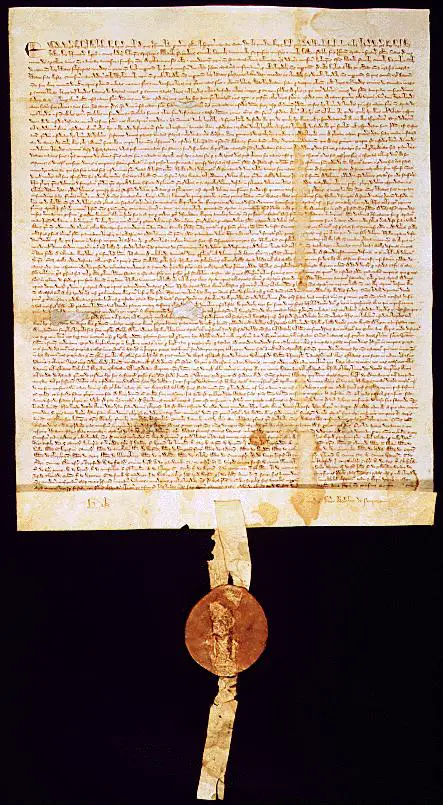
- Magna Carta
(1215) -- Established the principle that no one, not even the king or a
lawmaker, is above the law.
www.hotmail.com
- Charter
of the Forest (Carta de Foresta)
(1217) -- Henry III established rights of freemen to use forest
resources.
- Liber
Augustalis, or, Constitutions of Melfi (1231) -- Holy Roman
Emperor Frederick II established basic laws for the Kingdom of Sicily
that provided model for later constitutions of government.
- Reforms
of Simon de Montfort (1258-65) -- Had he not lost his cause and
died at the battle of Evesham, his reforms might have ended monarchy and
established republican government four centuries before Cromwell and
Lilburne.
- Statute
of Quo Warranto (1290) -- Codified the writ of quo warranto
as a pleading in English courts, and laid the basis for the writ of habeas
corpus.
- Britton,
(written ~1290, printed ~1530) -- Abridged, updated, more readable, and
more widely used codification based on Bracton, originally in the French
of the English court, reflecting changes in the law, including changes
in juries.
- Swiss
Federal Charter (1291) -- The beginning of the Swiss federal
republic that inspired Locke's notion of the social contract and the
American Constitution.
- Confirmatio
Cartarum (1297) -- United Magna Carta to the common law by
declaring that the Magna Carta could be pled in court.
- The
Declaration
of Arbroath (1320) -- Scotland's declaration of
independence from England.
- The
Prince, Niccol-- Machiavelli (1513) -- Practical advice on
governance and statecraft, with thoughts on the kinds of problems any
government must be able to solve to endure. Also see Selected
Works.
- Utopia,
Thomas More (1516) -- Satirical analysis of shortcomings of his society
and a vision of what could be.
- Discourses
on Livy, Niccol-- Machiavelli (1517 tr. Henry
Neville 1675) -- Argues for the ideal form of government being a republic
based on popular consent, defended by militia. Also see Selected
Works.
- Relectiones,
Franciscus de Victoria (lect. 1532, first pub. 1557) -- Includes De
Indis and De iure belli, arguing for humane treatment of
native Americans and of enemies in war. Provided the basis for the law
of nations doctrine.
- Discourse on Voluntary
Servitude, --tienne De La Bo--tie (1548, tr. Harry Kurz 1942)
-- People are ultimately responsible for their servitude, and non-violent
resistance can win their freedom.
- Union
of Utrecht, (1579, tr. Herbert H. Rowen 1972) -- Treaty that formed
the basis of the constitution of the United Provinces of the Netherlands
and was the inspiration for the American Articles of Confederation.
- Dutch
Declaration of Independence, (Act of Abjuration, 1581, tr. Oliver
Thatcher 1907) -- Inspiration for the American Declaration of
Independence.
- De Republica Anglorum,
Thomas Smith (1565, 1583) -- Written while he was ambassador to France,
describes the constitution of England under Elizabeth I in a way that
indicates tendencies toward republican ideals.
- Vindiciae Contra
Tyrannos (Defense of Liberty Against Tyrants), "Junius
Brutus" (Orig. Fr. 1581, Eng. tr. 1622, 1689) -- In 1683 it was ordered
to be burned.
- Six Books of the Commonwealth,
Jean Bodin (~1590 tr. Richard Knolles 1606, tr. & abr. M.J. Tooley
1955) -- Originated modern ideas of sovereignty, the state,
and citizenship.
- Politica, Johannes
Althusius (1614, Abr. & tr. Frederick S. Carney) -- First presented a
comprehensive theory of federal republicanism based on a covenantal
model of human society.
- The Mayflower Compact
(1620) -- One of the first expressions of the social contract in written
form.
- The Law of War and Peace,
Hugo Grotius (1625) -- Sets out principles of natural law and the laws of
nations.
- Selected
Works of Francis Bacon (1620-27). Includes Novum
Organum and New Atlantis. Argued for scientific approach
to problems of government.
- Selected
Works of Edward Coke (~1628) -- Commentary on English common and
statutory law, including the Institutes and the Reports.
- The Petition of Right (1628)
-- The objectives of the reform movement that led to the English Civil
War and the deposing of Charles I.
- Fundamental Orders of
Connecticut (1639) -- The first written constitution in the Western
tradition.
- The Elements of Law Natural
and Politic, Thomas Hobbes (1640) -- Discussion of the
natural law foundations of government.
- Massachusetts Body of Liberties,
Excerpts (1641) -- Early written expression of the liberties asserted by
the colonists in reaction to the oppressions of European governments.
- Nineteen
Propositions from Parliament to Charles I, and his answer, (1642)
-- Parliament demanded power from the king, and he made a defense of
mixed government. This was the break that led to the English Civil War.
- A Plea for Religious Liberty,
Roger Williams (1644) -- Early expression of the principle of religious
tolerance by the founder of the colony of Rhode Island.
- Lex,
Rex (The Law is King), Samuel Rutherford (1644) --
Theological arguments for the rule of law over the rule of men.
- On Liberty, John Winthrop
(1645) -- Discusses liberties demanded by the colonists.
- The Constitutional Documents
of the Puritan Revolution: 1625-1660, Samuel Rawson
Gardiner, ed. (1906) -- The English "commonwealth" led by Cromwell didn't
endure, but many of its ideas did.
- Selected
Works of the Levellers and their Allies (1645-56) -- Militia
leaders who sought legal reforms later sought by the American Revolution
and embodied in the U.S. Constitution and Bill of Rights. Includes An
Agreement of the Free People of England, an early attempt at a
republican constitution.
- De Cive (The Citizen),
Thomas Hobbes (1641-47) -- Discussion of the natural law foundations of
government.
- The
Laws and Liberties of Massachusetts, Excerpts (Adopted 1647,
published 1648) -- Codification of major parts of the common law that
served as a constitution for Massachusetts into the 18th century.
- Leviathan, Thomas
Hobbes (1651) -- Laid basis for social contract theory, providing
branching point for the theories of constitutionalism and fascism.
- Selected
Political Works of John Milton -- Includes Areopagitica
(1644), Tenure of Kings and Magistrates (1649), and Defense
of the People of England (1651).
- Selected Works of
James Harrington (~1656) -- Includes The
Commonwealth of Oceana.
- Selected Political
Works of Baruch de Spinoza (1670-7) -- Includes Theologico-Political
Treatise and Political Treatise.
- On the Duty of Man and
Citizen According to Natural Law, Samuel Pufendorf (1673,
1682 tr. Frank Gardner Moore) -- Based law and right on natural law.
- I The Law of Nature and of
Nations, Samuel Pufendorf (1674, tr. Basil Kennett 1703) --
Derived justice and the law of nations from natural law.
- Bacon's Declaration in the Name
of the People (1676) -- The manifesto of a rebellion in Virginia
led by Nathaniel Bacon.
- Habeas Corpus Act
(1679) -- English Parliament established key right.
- Patriarcha, Robert
Filmer (1680) -- This defense of absolute monarchy provoked Locke and
Sidney to write their major works.
- Plato Redivivus,
Henry Neville (1681) -- Argued for limits on the powers of government.
- Frame of Government of
Pennsylvania, William Penn (1682) -- Early model for written
constitutions.
- Selected Political
Works, James Tyrrell (1681-1694) -- Inspired Locke and other
political philosophers.
- English Bill of Rights
(1689) -- Early model for recognizing natural rights in writing. Much of
its language appeared later in the Declaration of Independence and U.S.
Constitution.
- Selected
Works of John Locke, (1669-1690) -- Includes The Fundamental
Constitutions of Carolina, A Letter Concerning Toleration,
and Second Treatise on Government.
- A
Discourse of Government with Relation to Militias,
Andrew Fletcher (1698) -- Analyzes importance of the militia to
legitimate government, law enforcement, and national defense.
- Discourses
Concerning
Government, Algernon Sidney (1698) --
Built principles of popular government from foundation of natural law
and the social contract.
- Constitution
of the Iroquois Confederacy -- A model for a federal
system of government for several Native American nations, it influenced
Franklin's proposed Albany Plan of Union.
- Pennsylvania
Charter of Privileges, William Penn (1701) -- Better model
adopted later.
- Selected
Works of Walter Moyle, (~1696-1721, pub. 1796) -- Includes Constitution
of
the Roman State, a commentary on English constitutional
issues from a Whig perspective.
- W Questions
of
Public Law, Cornelius van Bynkershoek (1737) --
Develops the law of nations and constitutional (public) law beyond
Grotius and Pufendorf.
- The
Principles of Natural and Politic Law, Jean Jacques
Burlamaqui (1748, tr. Thomas Nugent 1752) -- Commentary on the natural
law ideas of Grotius, Hobbes, Puffendorf, Barbeyrac, Locke, Clarke, and
Hutchinson.
- The
Spirit of Laws, Charles de Montesquieu, (1748, tr.
Thomas Nugent 1752) -- Laid the foundations for the theory of republican
government, particularly the concepts of the separation of powers into
legislative, executive, and judicial, a federal republic,
representatives elected from political subdivisions, a bicameral
legislature, and a system of checks and balances.
- Selected Essays of
David Hume, (1754) -- Includes "Idea of a Perfect
Commonwealth", which inspired the federal design of the U.S.
Constitution.
- Albany
Plan of Union, Benjamin Franklin (1754) -- An early model for
union that laid the foundation for what would eventually become the
federal union.
- In
Defense of a Plan for Colonial Union, Benjamin Franklin
(1754) -- Arguments in favor of the Albany Plan of Union, which was
rejected as too democratic.
- Institutes
of natural law,
Thomas Rutherforth (1754, Second American ed. 1832) -- Lectures on
Grotius De jure belli
et pacis.
- Selected Political
Works of Jean Jacques Rousseau, (1754-1772) -- Includes Social
Contract and A Discourse on Political Economy.
- The
Law of Nations, Emmerich de Vattel (1758) -- Based
constitutional and civil law on the law of nations.
- The
Rights of the British Colonies Asserted and Proved,
James Otis (1764) -- A position statement that laid the foundation for
the Declaration of Independence.
- Of
Crimes and Punishments, Cesare Beccaria (1764) --
Set out rights of the accused in criminal proceedings. Argues for crime
prevention over punishment, and against the death penalty and torture.
- Virginia
Resolves on the Stamp Act, Patrick Henry (1765 May 30) --
Protest of a tax without representation.
- The
Declaration of Rights of the Stamp Act Congress (1765) --
Asserted the position that people could not legitimately be taxed
except by their elected representatives.
- On the
Stamp Act, James Otis (1765 December 20) --
Oration Delivered Before the Governor and Council In Boston.
- The
Declaratory Act (1766) -- The English Parliament repealed the
Stamp Act, but couldn't leave well enough alone, and adopted this
statement of parliamentary supremacy over the British colonies.
- An
Essay on the History of Civil Society, Adam
Ferguson (1767) -- The evolution of societies and their forms of
government.
- I Camden, Mansfield
and the English Constitution -- The rivalry between two
British jurists helped provoke the American Revolution and shaped the
evolution of the jury system in both Britain and the United States.
- Letters
of Junius, Unknown (1767-72) -- Letters from an
English Whig and ally of Lord Camden against the efforts of Lord
Mansfield to restrict the role of juries, and on other constitutional
topics.
- The
English Constitution, John Louis De Lolme (1771) --
Discusses separation of powers, the jury system, and habeas corpus.
- The Rights of the Colonists,
Samuel Adams (1772) -- The Report of the Committee of Correspondence to
the Boston Town Meeting.
- Sheffield
Declaration (Resolves), Theodore Sedgwick (1773) -- Resolution in
Massachusetts that helped pave the way to the Declaration of
Independence.
- Fairfax County Resolves
(1774) -- Developed the issues that led to the Declaration of
Independence.
- Suffolk
Resolves (1774) -- Developed the issues that led to the Declaration
of Independence.
- Journals
of the Continental Congress, 1774-1789 -- Government under the
Articles of Association and Articles of Confederation.
- Declaration of Colonial Rights,
First Continental Congress (1774) -- Developed the principles being
violated by British rule.
- Articles of Association
(1774) -- Protest of British acts resulted in this prelude to the
Articles of Confederation.
- Charlotte Town Resolves,
sometimes called the Mecklenburg Resolves (May 31, 1775) -- Another step
toward declaring independence.
- Declaration of Taking Up Arms,
Second Continental Congress (July 6, 1775) -- Last step before declaring
independence.
- On Civil Liberty, Passive
Obedience, and Nonresistance, Jonathan Boucher (1775) -- Urged
obedience to established authority, representing
statist view of constitutional principles.
- Selected
Writings of Thomas Paine -- Includes Common Sense (1776)
and Rights of Man (1792).
- The Virginia Declaration of
Rights (1776) -- Further developed principles being violated by
British rule, adopted as part of Virginia
Constitution. Contains accepted definition of militia.
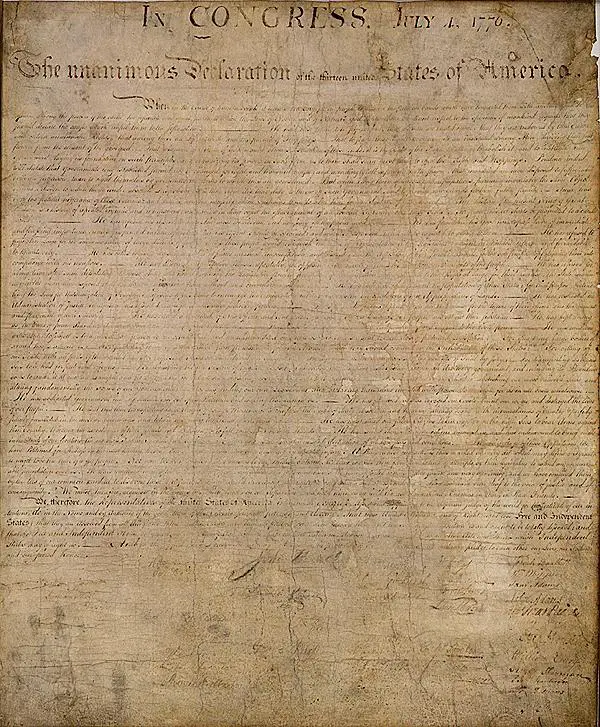
- U.S.
Declaration of Independence (July 4, 1776) -- Classic
statement of what constitutes legitimate government and under what
conditions men were justified in resorting to armed revolution to change
it.
- Selected Political Works of
Richard Price -- Includes Civil Liberty (1776) and Importance
of the American Revolution (1784).
- Fragment on Government,
Jeremy Bentham (1776) -- Critique of natural law theory of Blackstone's Commentaries.
- Early
State Constitutions -- State constitutions in use from independence
through adoption of the U.S. Constitution, for which they served as
models.
- Articles of Confederation
(Proposed 1777, adopted 1781) -- First attempt to form a common
government for the newly independent states.
- Proposed
Amendment to Articles of Confederation (1783) -- Rejected.
Attempt to amend unsatisfactory system.
- Amendment to Articles of
Confederation (1784) -- Proposed by Madison, but not approved
by Congress.
- Proposed Amendment to
Articles of Confederation (1785) -- Submitted but not ratified
by all states.
- Proposed Amendments to
Articles of Confederation (1786) -- Submitted, not ratified.
- The
Principles of Morals and Legislation, Jeremy
Bentham (1781) -- Introduced utilitarianism, to provide a better
theoretical foundation for penal statutory law than natural law theory.
- Criminal
Libel
and the Duty of Juries, Joseph Towers (1764, 1784),
Francis Maseres (1792) -- Three essays on the right of defendants,
especially in criminal libel cases, to have the jury decide the law as
well as the fact issues.
- Selected
Political
Works of Immanuel Kant (~1785-95) -- Includes Metaphysics
of Morals.
- The
Northwest Ordinance (1787) -- Model for administration of
common territory not yet a part of any state.
- Constitutional Ratification Debates
- Notes
of Debates in the Federal Convention of 1787, James
Madison. -- These are the proceedings of the Constitutional
Convention
held in Philadelphia, an essential guide to interpreting the intent
of
the Framers.
- Notes
of the Secret Debates of the Federal Convention of 1787,
Robert Yates. -- Record of parts of the Convention by one who later
opposed ratification and wrote articles as "Brutus".
- Constitution
for the United States (1787) -- Annotated and linked to other
documents in this collection.
- The
Federalist Papers, James Madison, Alexander
Hamilton, John Jay (1787-88) -- Arguments for ratification of the
proposed Constitution.
- Anti-Federalist
Papers (1787-89) -- Various essays criticizing the proposed
Constitution and urging changes.
- The
Debates in the Several Conventions on the Adoption of the
Federal
Constitution, Jonathan Elliot (1836) -- A collection
of documents, including proceedings of the ratifying state
conventions.
- Documentary
History of the Constitution of the United States of America,
U.S. State Department (1894, 1900) -- A collection of documents,
including some not in Elliot's Debates or the other works listed.
- Documentary
History of the Bill of Rights -- From the English Bill of
Rights through the proposed amendments of the state ratifying
conventions to the drafts debated in Congress before adopting the
final
version.
- W Selected
Essays from the Founding Period -- Lectures,
newspaper articles, and sermons which reflect the understanding of
constitutional issues during the founding period.
- I A
Defense of the Constitutions of Government of the United States of
America, John Adams (1787-89) -- Comprehensive
historical review of how various national constitutions worked, with
quotes from political philosophers and historians, that influenced the
Founders in their drafting of state and federal constitutions.
- Declaration
of
the Rights of Man and the Citizen (Marquis de
Lafayette, Thomas Jefferson, 1789) -- Manifesto of the French
Revolution, expressing its ideals.
- Selected
Works of Edmund Burke (1788-92) -- Commentary on the American
and French Revolutions and the political issues they raised.
- A
Vindication of the Rights of Men, Mary Wollstonecraft (1790)
-- Response to Burke's Reflections on the Revolution in France,
defense of republican government.
- A Vindication of the Rights
of Women, Mary Wollstonecraft (1792) -- Set forth the
arguments for women's rights.
Mother of Mary Wollstonecraft Shelley, the author of Frankenstein.
- Tracts
on
Political and Other Subjects, Joseph Towers
(1796) -- Followup on his earlier writings on the role of juries.
- Federalist-Republican Debates 1790-1800
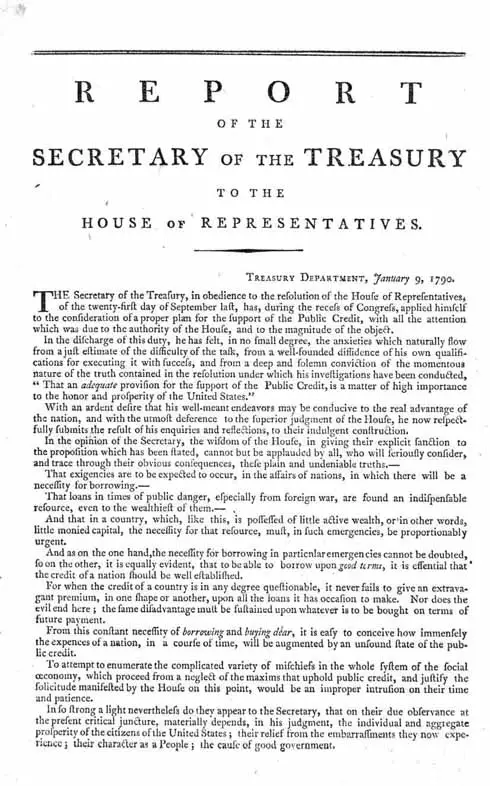
- [First]
Report
on Public Credit, Jan. 9, 1790.
- Against
the Constitutionality of the Bank of the United States,
Thomas Jefferson, Feb. 15, 1791.
- For
the Constitutionality of the Bank of the United States,
Alexander Hamilton, Feb. 15, 1791.
- Report
on Manufactures, Alexander Hamilton, Dec. 5, 1791.
- Rules
for
Changing a Limited Republican Government into an Unlimited
Hereditary One, Philip Freneau (1792).
- Farewell
Address, George Washington (1796).
- The
Virginia
Report, J.W. Randolph, ed. (1850) --
Documents and commentary arising out of the controversies attending
the
Alien and Sedition Acts, including the Kentucky Resolutions
of 1798 and 1799 and the Virginia Resolution of
1798, which set forth the "Doctrine of '98" concerning
constitutional
interpretation, and led to the "Revolution of 1800", the dominance
of
the Jeffersonians, and the demise of the Federalist Party.
- First
Inaugural Address, Thomas Jefferson (1801) -- Represents the
triumph of the strict constructionists following the excesses
represented by the Alien and Sedition Acts.
- Selected
Works of Thomas Jefferson -- Includes complete Writings
of Thomas Jefferson, Albert Ellery Bergh, ed., 19
vol. (1905).
- Selected
Works of James Madison -- Selected writings bearing on
constitutional interpretation.
- Tucker's
Blackstone, St. George Tucker (1803) -- The Commentaries
on the Laws of England by William Blackstone (1769), with
additional commentaries by Tucker adapting the common law to the needs
of the U.S. Constitution.
- Works
of James Wilson (1804) -- Includes "Lectures on
Law, 1790-1792" and other writings of the Pennsylvania delegate to the
Constitutional Convention.
- W Dallas, Cranch
and Wheaton -- Three
successive collections of U.S. Supreme Court decisions covering
1789-1816.
- Journal
of
William Maclay -- Maclay served as senator from
Pennslyvania from 1789 to 1791 and kept a private journal of his
experiences that is highly revealing.
- Selections
from Annals of Congress and Statutes at
Large -- Records of debates and statutes in the
first years of the U.S. Congress on matters of constitutional
significance.
- An
Inquiry into the Principles and Policy of the Government of the
United States, John Taylor (1814) -- A response to John
Adams' A Defense of the Constitutions of Government of the United
States of America by a leading theorist of the Jeffersonian
republicans.
- Construction
Construed and Constitutions Vindicated, John Taylor
(1820) -- A commentary on some of the misconstructions of the
Constitution by the Marshall Court.
- Tyranny
Unmasked, John Taylor (1821) -- An attack on the
constitutionality of protective tariffs and other violations of the
original understanding of the Constitution, as seen by the leading
spokesman for the Jeffersonian "Old Republicans".
- The
Elements of the Art of Packing, As Applied to Special Juries,
Particularly in Cases of Libel Law, Jeremy Bentham
(written 1809, published 1821) -- Critical treatise on abuses of the
English jury system and ways to reform it, which provides a historical
background to practices that continue to this day. The first publisher
in 1817 of excerpts from this work was prosecuted twice for doing so,
and the second three times, but in each attempt, juries acquitted them.
- New
Views of the Constitution of the United States,
John Taylor (1823) -- A discourse on the constitutional nature of the
American union reflecting views of Jefferson and Madison.
- I Commentaries
on
American Law, James Kent (1826) -- Kent's Commentaries
succeeded Tucker's Blackstone by reformulating the
relevant content of Blackstone's Commentaries and
integrating Common Law with Constitutional Law up to that time.
- A
View of the Constitution, William Rawle (1829) --
Early commentary on the Constitution and how it should be interpreted.
Made point that the Bill of Rights also applied to the states,
something that would later be denied, then partially reassserted by the
14th Amendment and the doctrine of (selective) incorporation.
- Selected
Works
of Daniel Webster (1782-1852) -- Selected writings
bearing on constitutional interpretation.
- Hayne-Webster
Debate (1830) -- Debates between Daniel Webster, representing
a broader construction of federal powers, and Robert Y. Hayne,
representing strict construction and the views of John C. Calhoun.
- Selected
Works of John C. Calhoun, (1831) -- Includes "A Disquisition
on Government" and "A Discourse on the Constitution and Government of
the United States". Developed the doctrines of concurrent
majority, interposition, nullification and state
secession, to correct what he perceived as a defect in the
design of the Constitution that permits a persistent majority to
dominate all three branches of government and legislate against the
interests of a minority to the point where they would consider their
rights violated.
- W Commentaries
on the Constitution of the United States, Joseph
Story (1833) -- Authoritative commentaries by an early Supreme Court
justice who helped shape interpretation of the Constitution for the
next century.
- A
Brief Enquiry into the True Nature and Character of our Federal
Government, ..., Abel Parker Upshur (1840, 1868) --
A review of Joseph Story's Commentaries on the Constitution
of the United States, arguing against some of Story's
expansive interpretations of national powers.
- Seneca
Falls Declaration, Elizabeth Cady Stanton (1848). -- Manifesto
of the women's equality movement.
- Civil
Disobedience, Henry David Thoreau (1849) --
Discusses duty of individuals to resist government excesses.
- Selected
Works of Frederick Bastiat (1849-1850). Includes The
Law, (1850) -- Classic treatment of one of the main
challenges to the survival of democratic government.
- Law
Dictionary, John Bouvier (1856). Also available as
two self-extracting executables: Part
1 and Part 2.
- Selected
Political Works of John Stuart Mill (~1860-9) -- Includes On
Liberty, Representative Government, Utilitarianism,
and The Subjection of Women.
- I Documents
and Commentary on Slavery, the Confederate States of America, and the
1861-65 War of Secession.
- The
American Republic: its Constitution, Tendencies, and Destiny,
O. A. Brownson (1866) -- Argument against secession, distinguishes the
constitution of government from the underlying constitution of the
society, and territorial from socialistic or egoistic democracy.
- A
Treatise on the Constitutional Limitations Which Rest Upon the
Legislative Powers of The States of the American Union, Thomas M. Cooley
(1868) -- Commentary reflecting constitutional thought at the time.
- The General Principles of
Constitutional Law in the United States of America, Thomas
M. Cooley (1891) -- Introduction by the leading constitutional scholar of
his era.
- The Evolution of the
Constitution of the United States, Sydney George Fisher
(1897). Traces each of the clauses of the U.S. Constitution back to
previous colonial, state and other government documents.
- Select Documents of English
Constitutional History, George Burton Adams and H. Morse
Stephens (1904) -- Collection of excerpts from the main documents that
comprise the English "constitution".
- The
Grand
Jury, George J. Edwards (1906) -- Classic treatise on the
grand jury, unequalled to this day.
- Federal
Usurpation, Franklin Pierce (1908) -- Historical and
constitutional analysis of how corruption, zealotry, and incompetence
combined to violate the Constitution.
- State
Documents on Federal Relations, Herman V. Ames
(1911) -- Debates among the states on the Constitution, 1789-1861.
- Robert's
Rules
of Order Revised, Henry Robert (1915) --
Essential manual for parliamentarians of deliberative assemblies.
- Constitutional
Conventions, Roger Sherman Hoar (1917) -- Treatise
on the way a body politic manifests its sovereignty.
- Recent
Changes in American Constitutional Theory, John W.
Burgess (1923) -- Constitutional scholar surveys departures from
constitutional compliance from 1898 through 1920.
- The
Revival of Natural Law Concepts, Charles Grove
Haines (1930) -- Review of natural law theory as the foundation of
constitutional law.
- Sources
of
English Constitutional History: 600-1937, Carl
Stephenson & Frederick George Marcham (1937) -- Collection of
the documents that define the English "constitution".
- Union
Now, Clarence K. Streit (1939) -- Classic treatise
on international conflict and federalism.
- Constitutionalism:
Ancient and Modern, Charles Howard McIlwain (1947)
-- Discourse on the origins and development of constitution theory.
- The
Origins of Modern Constitutionalism, Francis D.
Wormuth (1949) -- Historical analysis of the key constitutional concepts.
- Jurisdiction
over Federal Areas within the States -- Report of
the Interdepartmental Committee for the Study of Jurisdiction over
Federal Areas within the States (1956).
- Militia
Treatises, James B. Whisker -- Standard references
on the subject. Includes The Militia (1992) and The
American Colonial Militia (1997).
- Selected
Works on Tyranny
-- To understand the principles of constitutional republican government,
one must understand the principles of its opposite.
- Trials
of Liberty
-- Some of the best expositions of law and constitutional principles are
made during trials.
- Landmark
Court Decisions
-- Includes commentaries on the rulings and the opinions.
- Constitutional
History &
Commentary -- Books, anthologies, and essays.
- History
& Economics Background
-- Books, anthologies, and essays.
- Legal
Briefs Collection
-- Organized by subject.
- Law
Review Article Collection
-- Organized by subject.
- Common
Law Writs --
Sometimes called Extraordinary Remedies, they are
key to understanding the Constitution.
- U.S.
State Constitutions and Web Sites
- National
Constitutions
-- The supreme laws of many of the most important countries, for
comparative analysis.
For contributions to and suggestions for additional items to
be added to this collection, contact editor. We now offer these documents either on CD/DVD or as
printed editions, as premiums
to
donors.
To view some of our files properly, you may need to download
special fonts, or install a viewer for the graphic files we use. For
more on fonts, graphic viewers, and other tools, see our Internet
Tools page.
To get a print copy of these books, go to our Purchase
Links page where you can order them. There are
also links there to the Kindle
versions of some of the works.
Looking for a book, music album, or video? Order using our
links to Amazon.com beside the item, indicated by an A,
and we get a commission on your purchase. Or if not listed or marked,
use this form to find the item you want:
See our Recommended
Reading lists for other works.
Home
Support Constitution Society
If this site has helped you, please consider donating via Zelle:
treasurer (at) constitution.org
Or scan the QR code on the left.